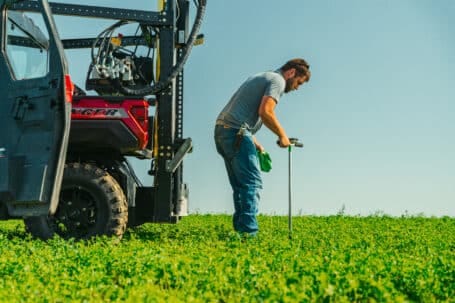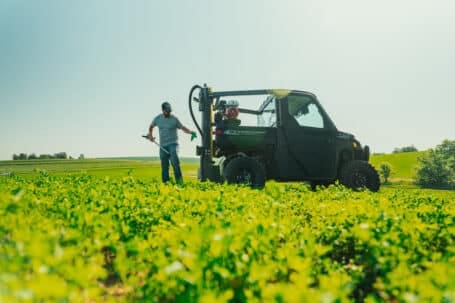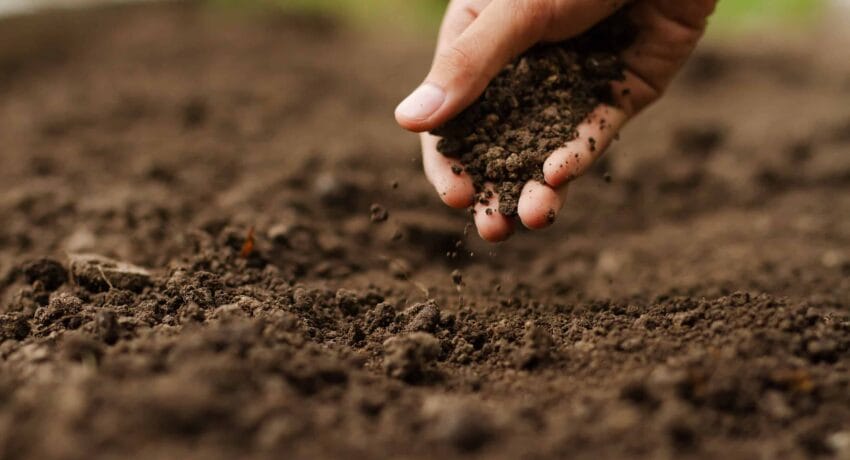
Soil carbon credits can be generated when improved agricultural practices, such as cover crops or reduced tillage, result in additional carbon being stored in soil, and that increase is measured and verified under a registry methodology like Verra’s VM0042.
They have been called the next big thing in carbon markets for years, and the market is still young. The first sustainable agriculture methodologies only received the Integrity Council’s Core Carbon Principles label in October 2025.
On September 22, we put a project developer, a buyer and a measurement team on one stage to ask why. Our panel took place at the Regenerative Systems Summit during Climate Week NYC. Here is what we took away from the week, for carbon project developers, ag input companies, and food and beverage companies building insetting or offsetting programs.
Key takeaways
- The bottleneck is bankability. A soil carbon credit sells when the asset is real, a buyer is convinced, and the uncertainty can be priced.
- Cost remains important, but in our conversations at Climate Week, buyers increasingly focused on whether a credit and its underlying data would remain defensible years from now.
- An issued credit still needs a buyer. Large buyers often run their own review before they purchase.
- Projects that reach market consider the registry, financing and buyers early, and invest in a baseline that can withstand scrutiny.
Why haven’t soil carbon credits scaled?
Mostly because buyers struggle to defend them. Practices like cover crops and reduced tillage are well understood in the field. What remains hard is proving, years later, how much carbon a project actually stored and how confident anyone can be in that number.
The concerns are legitimate. Soil carbon varies within a single field, it can be released if practices stop, and methodologies don’t always agree. When CarbonPlan reviewed 17 soil carbon protocols in 2021, it found wide differences in how rigorously they calculate, verify and secure the carbon they credit.
The market isn’t short of interest in soil carbon. It is becoming more mature and more demanding. In New York, the buyers and financiers we spoke with were less worried about price than about investing in something they couldn’t defend years from now. Data quality, uncertainty, permanence and the credibility of the measurement came up again and again.
New to how these credits are generated? Our guide to agricultural carbon credits covers the main programs and standards.
What makes a soil carbon credit bankable?
We think about what moves soil carbon to market through three conditions that need to come together: ground truth, buyer conviction and bankability. The practices are really in place and stay in place. A buyer or financier is convinced enough to pay. And the uncertainty in the carbon number is quantified well enough to be priced. When one is missing, the asset is stranded.
We built the panel around this framework, with one seat per condition:
| Condition | The question it answers | Seat on the panel |
|---|---|---|
| Ground truth | Does the asset exist, and will it hold up over time? | Caroline Missen, Chief Sustainability Officer, Cultivo |
| Buyer conviction | What does a buyer need to see to commit? | Daniel Sutherland, Vice President, McGill St-Laurent Climate Solutions |
| Bankability | Can the uncertainty be quantified and priced? | Scott Dickson Dagondon, VP, Data & Global Client Solutions, ChrysaLabs |
David Moffatt, Managing Director at Inlandsis Fund, moderated.
Why uncertainty is the condition we work on
Every soil carbon number comes with uncertainty. Insurers, lenders and commodity traders price uncertainty every day. What they can’t price is uncertainty nobody has measured.
That is the gap ChrysaLabs works on. In 2025, our soil sensing technology became the first direct-contact proximal sensing technology validated by a third-party auditor, Bureau Veritas, for use under VM0042. For a buyer, that means an independent auditor has checked how the measurement is made.
What changed at Climate Week NYC 2026?
Two questions moved. Buyers stopped asking how cheap measurement can be and started asking how long it will hold up. Developers stopped asking how to start a project and started asking how to sell the credits.
From cheap MRV to defensible data
What we heard: it’s no longer “how cheap can we do MRV?” but “will this still be defensible years from now?”
For years, soil carbon MRV (measurement, reporting and verification) competed heavily on cost per acre. That made sense while the goal was to get projects started. But as projects mature and credits face greater buyer scrutiny, defensibility becomes increasingly important alongside cost.
“The cheapest carbon data isn’t necessarily the most valuable,” said Alex Renaud, Commercial Director, Americas at ChrysaLabs. “The most valuable data is the data you can still defend years from now.”
Our overview of soil carbon MRV explains how the three steps fit together.
From starting projects to selling credits
A year ago, developers mostly asked how to start a project. This year, we’re increasingly hearing a different question: we’ve done it, how do we sell the credits? That is progress, but issuance does not guarantee a sale.
Even after a registry has reviewed a project and issued credits, a large buyer will often run its own review of the file, on top of standard third-party verification. Microsoft is one example of a buyer that runs this kind of review. It takes time, and developers who build it into their cash-flow plan avoid an expensive surprise.
Selling also takes visibility. Carbon credit buyers need to know your credits exist, and they want to see the people behind them, starting with the farmers. Cultivo is a good example: it talks about its projects in public and shows up at conferences, so buyers know it has credits to sell.
The same questions apply to food and beverage companies working within their own supply chains: a Scope 3 insetting claim is only as strong as the measurement behind it.
What do soil carbon projects that reach market do differently?
They consider the registry and methodology, financing and target buyers early in the design process, and they invest in a baseline that can withstand scrutiny. Projects that stall often made an early design choice that no registry or buyer could accept later.
What we heard: projects that move forward plan for the registry, financing and buyers from day one.
“Carbon is complicated, but you can control how you set up your project,” Scott said. “Surround yourself with people who know what to look for, define the project properly from the start, and don’t rush.”
A project that doesn’t fit any registry’s requirements can’t issue credits, however good the practices on the ground. That is why choosing the registry and methodology comes first.
Don’t underinvest in the baseline
For projects that quantify changes through repeated soil measurements, the baseline establishes the reference condition against which every future credit is calculated. What you measure today has to remain defensible and reproducible for as long as the project runs, which can be decades.
Carbon baselining is where cutting costs is most tempting, and most expensive later. Before you lock a baseline, check that:
- sampling density and depth meet the methodology’s requirements;
- the uncertainty is quantified and documented;
- another team could reproduce the result from your data and protocol.
Do soil carbon credits need field measurements, or are models enough?
Both have a role in soil carbon quantification. Models let a project scale across thousands of acres, while field measurements provide the ground truth needed to calibrate and validate those models, strengthening their credibility with registries and buyers.
What we heard: models let you scale. Measurements give you credibility.
Integrity bodies are moving carefully too. When the Integrity Council for the Voluntary Carbon Market (ICVCM) approved VM0042 v2.2 under its Core Carbon Principles in October 2025, the approval covered the soil measurement techniques allowed by the methodology except digital soil mapping, which the Council said it had not assessed.
The debate is far from closed. The Summit put remote sensing versus direct sampling on its own agenda, and the measure-and-model approach has serious backing from universities and governments. ChrysaLabs is sending a team to Colorado to study the approach in the field and compare it with our own.
For the trade-offs in detail, see our pieces on soil carbon measurement methods and emerging technologies in soil carbon MRV.
Frequently Asked Questions
Are soil carbon credits bankable?
Some are. In our framework, a credit is bankable when the practices are verifiably in place, a buyer is ready to pay, and the measurement uncertainty is quantified well enough to price. Many projects meet one or two of these conditions. Fewer meet all three.
Is VM0042 approved by the ICVCM?
Yes, with conditions. In October 2025, the ICVCM approved Verra’s VM0042 v2.2 for Improved Agricultural Land Management under its Core Carbon Principles, alongside the Climate Action Reserve’s U.S. Soil Enrichment Protocol v1.1. Digital soil mapping was not assessed as part of the approval.
Why do buyers review carbon credits that are already issued?
Because the reputational and financial risks stay with the buyer. Large buyers often conduct their own due diligence before purchase, even after registry verification and issuance. Developers should plan for that extra step.
What is a soil carbon baseline?
In carbon accounting, it is the measurement of soil organic carbon before new practices begin. It establishes the starting condition against which later changes are quantified. A measurement that can’t be reproduced, or whose uncertainty isn’t documented, can weaken the credibility of the resulting credits.
Are soil carbon credits permanent?
Not automatically. Carbon stored in soil can be released if practices stop, so registries rely on mechanisms such as long-term commitments, monitoring and buffer pools. For example, credits seeking the ICVCM’s CCP label under the Climate Action Reserve’s U.S. Soil Enrichment Protocol v1.1 require a minimum 40-year permanence commitment, along with other conditions. More in our guide to additionality and permanence.
About the panel
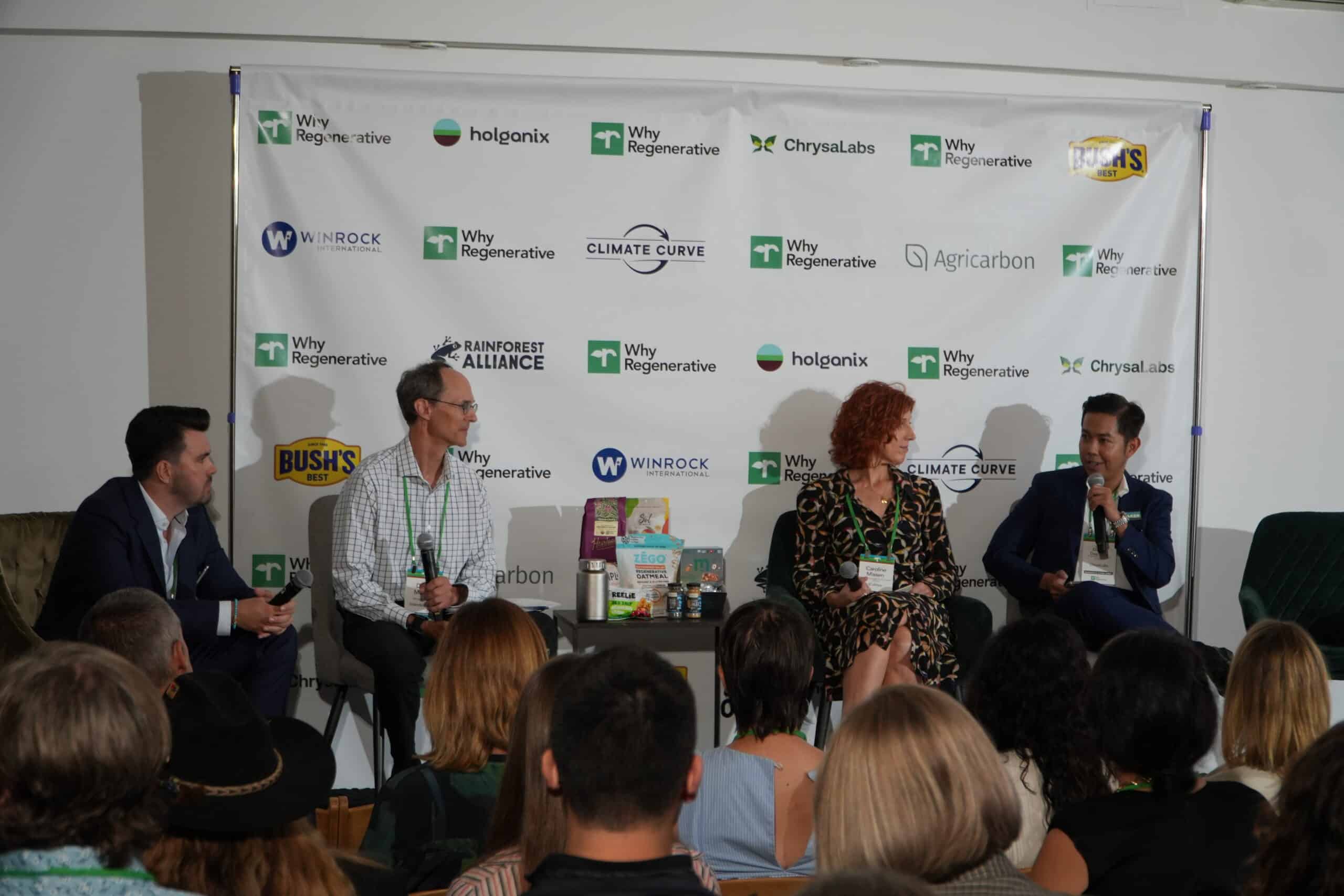
Bankable or Stranded: What Moves Soil Carbon to Market was our panel at the Regenerative Systems Summit, hosted by Why Regenerative during Climate Week NYC, on September 22, 2026, at 873 Broadway, Manhattan. Speakers: Caroline Missen (Cultivo), Daniel Sutherland (McGill St-Laurent Climate Solutions) and Scott Dickson Dagondon (ChrysaLabs). Moderator: David Moffatt (Inlandsis Fund).
Setting up a soil carbon project? Talk to us before you lock your baseline. Book 20 minutes with Alex Renaud or see how we work with project developers.
About the author. Scott Dickson Dagondon is VP, Data & Global Client Solutions at ChrysaLabs. He works with carbon project developers and agricultural organizations to design soil organic carbon measurement approaches that are scientifically robust and commercially relevant. He took the bankability seat on our panel at Climate Week NYC 2026.